Friday, February 4, 2011

Another year older...


I know that 26 isn't very old in the scheme of things, but for some reason to me it seems a whole lot older than 24 or 25. 24 is still considered early twenties, then 25 is mid twenties, so 26 seems like late twenties to me (and closer to 30!). Anyway, I don't seem too worried about growing up too soon since I still have no plans to settle down anytime soon. Unfortunately my birthday weekend was spent in bed, with a thermometer, juice, water, and my ipod as I was sick with the flu. After taking my temperature and realizing I definitely had a fever, I was a bit worried about malaria. It is supposed to bring on flu-like symptoms and last for a few weeks, so I immediately called my coordinator and someone came in a car to take Amy and I to the hospital. After explaining some of my symptoms to the doctor, in broken english, he told me I'd need to head to the lab to get some bloodwork done. Anyone that knows me, knows that I'm pretty terrified of needles, so I was definitely dreading getting blood drawn, especially over here since we weren't sure what the facilities would look like. Although the floor wasn't too clean, some of the cabinet doors were broken off, and no latex gloves were worn, the technician did open a sterile needle for me, so that was a little reassuring. I, of course, had to look away while he was drawing my blood, but in the middle of it, Amy came over and held my hand, and I thought, crap, things must be really bad! Appparently he had missed my vein a few times, then was digging around to find it...luckily I didn't see how enormous the needle was until he was all done, or I probably would have fainted. So after about 30 minutes of processing the blood, I found out I didn't have malaria! The doctor thought I had a chest infection, so prescribed me some cough syrup, antibiotics, and some ibprofen for the fever. Unfortunately after 7 days on the antibiotics I'm still coughing, but still hoping that it will clear up soon!

Back to the birthday festivities! The Rwandan diet tends to be quite starch heavy, lots of rice, potatoes, green bananas, bread, etc, so I have really been craving a big piece of meat. On my birthday I went out to a cafe with our friend Lucy and got myself a big burger--it was awesome. After some time on the internet reading birthday wishes, we headed to the U.S. Embassy to sit by their pool for a while. We conveniently brought along all our toiletry needs (shampoo, soap, facewash, etc.) to indulge in one of their hot showers---and boy was it amazing--especially after not having water at our house for a week! We also met a couple other Americans whose parents work at the Embassy who were here on holiday for a few weeks. For dinner, we had planned to go to a Thai restaurant that I had been reading about in one of the guidebooks. After circling around the area for a while trying to find the restaurant, we settled on an Ethiopian restaurant instead, a cuisine we had talked about trying while we were here. So after waiting about an hour for our meal, the waitress brought out a giant pancake-looking dish with all sorts of little piles all over it, sauces, vegetables, and something resembling meat. We dug into the pancake (which is supposed to be used like a fork to pick up the sauces, meat, and veggies), and took a few bites of this strange food. It was actually going down pretty well until one of our friends mentioned that the pancake tasted like a mixture between soggy bread and a kitchen sponge. After that comment, none of us really ate much more, which may have been a good thing beacause after inspection, we're pretty sure the meat on my plate was some type of animal vertebrae. The only thing that really saved our dinner was a predator-prey discovery channel viewing of a gecko on the ceiling going after a moth for it's dinner. Dessert was served back at the U.S. Embassy, and although the ice cream was no comparison to Ben and Jerry's, it was a great ending to a very eventful birthday! We plan on celebrating again this weekend with a few drinks and undoubtedly a tastier dinner.

We are beginning to feel a bit confined in Kigali, so are looking into booking some trips away on weekends. One thing we're dying to see is the gorilla's, which is pricey, but we've heard well worth it. Another trip that some friends are trying to plan is over into the DRC (Congo), to climb an active volcano and visit the border town of Goma. We had to visit the Congolese Embassy to apply for a tourist visa, and were told that we needed to have Rwandan residence visas (which neither of us have), an invitation letter from the Congolese government, and, most importantly photocopies of our credit card in order to get into the country. Luckily, the woman at reception kindly organized a meeting for us with the Congolese Ambassador, whom everyone in the waiting room had to stand and greet when he arrived in the building. After moving from 3 different waiting areas, the receptionist told us that she would be translating, and that we would be asked some questions and make sure that we answer them completely truthfully. Luckily the Ambassador, or "Your Excellence" as the receptionist called him, spoke french, so I was able to understand bits and pieces of what he was saying. Other than asking about our jobs back home, wishing me a happy birthday, and briefly asking why we wanted to visit the Congo, it was a pretty painless meeting. We were granted a one month visa for $140 US Dollars, for a trip that would actually only take a day or two. Unfortunately we later discovered that Amy's Rwandan visa is only single entry, so she may get stuck in the DRC if she leaves, or have to pay for another visa to re-enter Rwanda. Our weekend trip to the volcano is postponed for now, but hopefully we will book the gorilla trek soon--something we've both been looking forward to!


Thursday, February 3, 2011

What a week...

Rain showers :)


Walking to work today I found myself contemplating the events from the past week and realized how content and happy I feel in this foreign country amidst the chaos, the dirt and the unfamiliar. Its strange how quickly the armed soldiers on the back of trucks and standing in road side bushes, the barefoot children begging and the men wearing pink jumpsuits (indicating that they are prisoners  and perpetrators of the genocide) have blended in to day to day life and become a normal sight. So much has happened over the past week and I don’t really know where to start. Sitting in the back of a taxi last Wednesday with a malnutritioned teenage girl propped up between us I could feel the lump in my throat and tears welling in my eyes as I listened to Angel’s story.  We spotted Angel’s thin body laying motionless on the grass on the side of the road as we walked back to work following a meeting with an NGO. Hesitantly we pulled back the torn and dirty jumper which was covering her face and crowd of bystanders soon gathered around to watch. After what seemed like a lifetime an 18 year old named Brownie crouched down beside us and interpreted.  Angel was a 15 year old refugee who had come to Rwanda a year ago with her parents and three sisters, her parents had since died and she now lived with her sisters in an extremely poor village in Kigali. Three days ago she had been hit by a car and it had taken her two days of begging to get enough money to cover the local hospital charges. Patients rely on family to bring in food to them as it is not provided by hospital. No one had been to visit Angel and on her four hour walk home her injured and weak body could walk no further so she rested on the roadside where we found her. We pulled out the food, water and panadol we had in our bag. As I helped her lift the bottle of water to her lips Cait went to a nearby shop to buy her some food she could take home with her before we found a taxi to drive her there.  Holding her hand in the back of the taxi it dawned on me that this young girl was the same age as my youngest brother. I couldn’t help but think how different the circumstances and lives of these two teenagers growing up on opposite sides of the world are and how unfair and unjust poverty is.  The following day we went to visit an orphanage that some of the other volunteers we live with work at. It was heartbreaking to see the conditions that these children were living in. This particular orphanage is the home to fifty one children aged between 3 months to 18 years. The children are housed in two dirty brick buildings which are separated by a small split level mud courtyard. Dark musty hallways, with small bedrooms on either side, run from the central room of each ‘house’. There are two bunks with a thin mattress and single blanket are in each bedroom and the children all share a bed. Like most houses in Rwanda the orphanage has no electricity. I can only imagine how cold it would get in winter. The cooking is done out the front over a coal fire and drop toilets in wooden shacks are out the back. Children with shaved heads and in soiled and wet clothing played with rocks and bits of wire that had become their most prized possessions. Ella explained to us that the few toys that are bought into the orphanage are quickly destroyed as the children have never had toys before so have no concept of sharing or even how to play. The only toys I saw were two balls. Within seconds of walking through the gates children surrounded us, eager and desperate for attention and human touch.  I sat on the ground all morning holding, hugging, tickling and stroking the faces of these beautiful children with big dark eyes, my resolve to one day adopt a child strengthening. One of the reasons we decided to visit the orphanage on this day was to help the other volunteers carry back the 50 chickens (yes, live chickens) that they were going to buy for the orphanage for the newly built chicken coup which had been constructed by a recent volunteer. I was curious as to the logistics of how the five of us would each carry ten chickens. I had been watching the locals and the way to do it seemed to be to hold them upside down…would my hands be big enough? I could already picture myself accidently dropping one and then having to run down the dirt road holding my other nine while trying to catch the tenth. So we set off at lunch time, walking a short distance before catching a bus and then a moto. I was pretty sure that they wouldn’t be letting us back on the bus with fifty chickens so I guessed that our return journey would be on the back of a moto with our chickens. I had a slight panic as the moto ride in the morning was a rather bumpy one down the pot hold street and I had needed to hold on with both hands, so how was I going to balance on the motorbike with my daypack and ten chickens?? This was going to be a sight to see! While getting on my moto on the way to the chicken man there was a bit of hustling going on with some other moto drivers which resulted in my driver taking off when I was only half on and I ended up with a nasty and fairly large burn on the inside of my leg leaving a patch of skin raw and exposed and the rest blistered. Cait and I made the made the decision to head home as she wasn’t feeling too well and I needed to get water on my burn …of course there was no clean water where we were.  While I knew it was a serious burn I wasn’t overly worried as the pain subsided completely within thirty minutes and I was happy that I had been able clean it and that it was well dressed. Two nights later, at a house party hosted by the American Marines and at the Embassy, I mentioned my burn to ex-firefighter and medic who was now working for the embassy. He immediately expressed his concern that the burn may be third degree after I described the wound and the fact that I had no pain. It needed to be checked out.  I was wearing tight jeans and after trying to pull the leg of the jeans up for a good 5 minutes I realized that this was not going to work -  the jeans either needed to be cut or taken off. Since they were the only jeans I bought with me I wasn’t keen to have them cut, so I found myself in the bathroom with a cardigan wrapped around my waste, jeans at my feet with a stranger looking at my burn.  It turns out that I have three burns all in one, the raw part of the burn being third degree.  After redressing the burn and with instructions on how to care for it, the medic cheekily asked “so was that the first time you had been in an American Embassy bathroom with a guy and your jeans off?”. A little while later, and after my first ever game of beer pong, the head of security at the embassy made an announcement that there had been a grenade attack five minutes down the road and that three people had been killed and twenty-six injured seriously. While the attack didn’t seem to be targeted at Westerners it was scary to be so close to such unprovoked violence.  To add to the events of the past week is the fact that we have had no water at the house for now seven days. Exactly a week ago today our water supply mysteriously stopped. By day one I was already feeling incredibly dirty. Having spent the previous day at the orphanage and walked forty five minutes in the sun on dusty roads I was looking forward to the cold drizzle of water I have come to know as a shower but there was not even a drop. Wet wipes would have to do. Three days later I was getting desperate.  That evening we had one of the heaviest rain showers I even seen – this water was not going to be wasted so I threw on my bikini, grabbed my toilet bag and headed outside. The rain was so heavy I was able to wash, shampoo AND condition my hair. I have never really appreciated being clean until that moment. When the water will come back on is completely unknown, we do have a chocolate sweep stake running at home with bets as to when we will have water again. So the week has been eventful to say the least but there is something about this place and the people which makes up for all of it. And for those of you who are wondering about the chickens, it turns out that they were baby chickens and could be transported in two boxes.

Friday, January 28, 2011

Dawn til Dusk...a typical day


Our mornings usually begin around 6am with the noise of a shower through the thin walls or the loud voices of the staff outside our house preparing breakfast. We attempt to sleep until about 7am, where the talking, cooking, showering, and toilet flushing inevitably forces us out of bed. We crawl out of our mosquito nets, and I (Cait) into the cold shower (if that's really what you can call it). I wear flip flops into the shower (to protect against any unknown foot fungi while here, eww), and turn on the water. Amy and I have discussed that even though the showers are consistently cold, we continue to turn the hot nozzle on, just in case any trickle of warmish water decides to come our way. The shower has two water spouts, one that drips from the top and a hose that pours out the bottom. After bringing the hose up to a level where you can wet your hair/rinse, the pressure completely leaves the hose, so you must use the spout that drips from the top, which is now pouring out more steadily--it's quite the balancing act. After the shower, I usually attempt to dry off with my hand towel size camping towel, which is definitely not as absorbant as it claims to be. I did decide to splurge on a normal towel at the a mall, so that's made a real difference. After getting dressed, I head to breakfast, which usually consists of white bread or rolls, jam and peanut butter, some type of fruit, and tea and coffee. The toaster at the house is a little tricky, it toasts very well done, and only on one side. If you leave your toast in there for longer than 30 seconds its char-grilled. We have found that the most effective technique is to toast each side side for approximately 15 seconds, flipping in between. The coffee is on-and-off, some days quite watery, but others really nice and strong. The powdered milk for coffee and tea is actually alright, but after looking at the container's label, I think it could be baby formula. After breakfast, and some conversations with the other volunteers about their days, we usually head back to the room to pack all the necessities for the day. This includes, but is not limited to, bug spray, sunscreen, chapstick, pen and notepad, hand sanitizer, tissues, flashlight, hair brush, english-kinyarwanda dictionary, umbrella, swiss army knife, journal, book, camera, cell phone, computer and/or zip drive, lunch/snacks for the day, and utensils for said lunch/snacks. We learned the last part the hard way when we bought yogurt, but didn't pack spoons and had to try to drink the yogurt from the containers. Passion fruit was even trickier--trying to suck or use our fingers to get it out proved very embarrassing because of all the people walking by our little picnic. So after showering, eating breakfast, and packing our necessities, we head off on our 45 minute walk to work. As we walk down our road, Niboye (pronounced Nee-boy-ee), we come across women sweeping the street (what the point of sweeping dust away that will be there again in a few hours, we don't know), men landscaping for their Umudugudu (village community), and children walking to school. The men and women sometimes greet us with a Murakoze (Good morning), or just stare and stop their work for a moment. The children will regularly shake our hands and say 'morning' or 'how are you?', and sometimes (as happened the other day when we got lost, and were losing hope) random children ran toward us with open arms for a big hug. Needless to say, a great way to start the morning. When we get onto the main road there are people walking to work, walking to market, and walking to many other places (we're not sure where, but they always seem to have somewhere to go), there are moto's and cars whizzing by, and the sun is usually just starting to feel hot on our skin. As a side note, being Westerners, who always seem to try to cram as many 'productive' things into the day as possible, we usually walk as fast as we can to get from place to place. Well after trying this strategy on our first day at work, we arrived to work puffed and hot, and no one even cared that we were early. So, we've been trying to remind ourselves to take an African pace to life, slow down a little and not rush the moment. After all, being 30 minutes late here is just as good as on time. 1 hour late, and your a little late. And when things get put off until the next day, no worries, why hurry? Ok, so back to our walk to work...as we approach the second rotary and section of shops close to work, we see our first set of armed guards in front of some of the shops and around the construction on the rotary. Not only are these security/government/police officials armed with rifles, but their fingers are actually on the trigger the entire time they are standing guard. This was only slightly scary the first time we saw it, but our volunteer coordinator assured us that she's never seen them actually use the guns, unless they needed to. After passing through the last section of shops and construction, we are almost at work. I will leave the actual work discussion for Amy's blog, as our daily activities are clearly way more than just work.
After work, we may stop by the internet cafe, a 5 minute walk from work. Regularly the connection is bad, or the power may go out, which can be a bit frustrating when our only means of communication is by email, but nevertheless, we try to roll with the punches. We may also stop by a small convenience store to pick up some cookies, snacks, or other treats to break up the rice and beans diet, or may buy some mango's from a woman carrying them on her head. There's definitely a rush hour when we head home as well, people all heading home after work, or heading home after searching for work all day. After our walk home (sometimes we opt for a moto if we're tired), we usually unwind with the other volunteers and tell each other about our days at work. For dinner we usually have rice or spaghetti, potatoes, some sort of vegetable with sauce on it, and small pieces of meat...sometimes fish which is great, other times beef that tastes like it's been cooked for 3 hours too long...but I usually try to force it down, at least for the protein. All 9 of us eat together at a big table each week night, which has a really nice, family meal feeling about it. After dinner we may read for a while, shower to get the layers of dust and sweat off, tell stories, or give each other backrubs (very happy about this recent trend!). Anywhere between 10-11pm we usually head to bed, I put my earplugs in, and Amy and I both climb back under our mosquito nets, and sometimes fall asleep on top of our blankets for another balmy African sleep.

Monday, January 24, 2011

Kigali after dark....


Little did we know, Kigali is a party town! The last thing we expected when we arrived in Rwanda was to have an active social life outside volunteering and networking with other organizations. While enjoying a smoothie at a cafe our first week here, we met another American guy who works for Red Cross studying rainfall and predicting floods in Africa. After talking for a while, he mentioned he would be in the city on the weekend and would we like to go out for some drinks. Of course Amy and I agreed (I mean, it's pretty hot here, and one can get very thirsty). We met him and a few other Americans who work with him in a small village outside Kigali at a bar called Papyrus. After requesting three different bottles of white wine off the menu, none of which were in stock, we ordered a Rose. The waiter brought it out, and it was warm. Not room temperature, or slightly chilled, but warm. Luckily, the owner happened to walk by, and spoke excellent English, and grabbed the bottle and said, "Come on, this needs to be chilled!" So after getting a wine cooler, ice, and some nice conversation, our first night out in Rwanda was becoming pretty eventful. After a couple glasses of wine, we hit the dance floor where we boogied to mainly American pop, rap, and r & b music, and occasionally something local or latin. We struck up multiple conversations with some local guys, and by the end of the night had arranged to have every meal for the next day paid for! Sweet! We met a guy named Titi (the now infamous "Mr. Wrigley") who works for Wrigley chewing gum, who (while trying to explain his job) listed every flavor of Wrigley chewing gum to Amy. After a second wind, we decided to head to another bar for a night cap before heading home in the wee hours. The moto drivers took us to this bar that was in a residential part of town, and seemed to be in the middle of no where. Although we were the only muzungu's (foreigners or white people) there, they played great dance music and the beer was ice cold. Going out in Kigali, we got to see the more affluent young people in Rwanda, living a seemingly successful, western lifestyle. We have also been "networking" with other volunteers in the area after trading stories about our experiences so far.
So in the spirit of going out...lets discuss spirits. Our 'on a budget' choice for drinks has been a number of the local beers, the cheapest of which is Primus at about $1 US dollar each. It tasted pretty close to a Budweiser, so we've been pretty satisfied with that. There are a number of others such as Mutzig, Skol, and of course Turbo King. There is also of course normal spirits such as vodka, whiskey, rum, and a home-brewed gin from Uganda called Uganda Waragi. We also saw wine being poured out of a bag at the bar, so definitely opted for beer instead.
This weekend we met up with some guys who work at the U.S. Embassy and were treated to some first-class transport when they picked us up in a white suburban (probably the nicest car I've seen in Rwanda, thanks U.S.A.). We went out to the usual hangout, Papyrus, where we met more volunteers. Amy and I found it really nice to talk with like-minded people who are passionate about helping out over here. Of course the dancing, drinks, and crazy moto rides make for a memorable night too :)
xo Cait

Friday, January 21, 2011

Rwanda vs. Ivory Coast Football Champs!


On Wednesday we went to the semifinal of the African Under 17 Football Championship, Rwanda vs Côte d'Ivoire. Nations from around the world have been competing over the past few weeks to qualify for FIFA U-17 World Cup which is being held in Mexico later this year.  My youngest brother Nathan is in the New Zealand U-17 Team which qualified last week at the Oceania Football Championships to play at the World Cup so I more than excited to be on the other side of the world watching teams that the New Zealand team will play against in a few months time.  The tickets were cheap so we decided to take the  children from the FVA school with us to the game.  We walked the short distance from the school to the stadium with 9 excited children, none of whom had been to the stadium before let alone an international match.  We did a head count at the gate and found that we now had 10 children, an extra  child had attached himself to our group somewhere along the way. What was one more?.. sure he could come too. When we arrived there was a group of a few hundred men gathered and waiting to go through security. Police armed with batons held this scary looking group back and security personal ushered Cait, Lucy and I, each with 3 children hanging off our arms, towards the front of the crowd where we waited to go through the slow security pat down and bag check.  Security didn’t seem to be in any rush to get the crowd through this check despite the minutes counting down to kickoff.  Cait and Lucy were on the other side of the fence and I was nearly at the front of the security queue when there was a rumbling noise from the crowd behind me as it started to surge forward.  At this moment my heart was thumping and I feared that the children and I were about to be trampled in a stampede that seemed to be close to breaking out. It went through my mind at this point that perhaps the decision to come to the football ourselves, let alone with a group of children, was perhaps one of the stupidest decisions I had ever made.  The police stood their ground and after hitting wildly with their batons for a minute or so the crowd settled down and returned to waiting patiently. I was more than relieved to get to the other side of the fence and into the stadium. To say that us 3 muzungo (white people) stood out would be an understatement. Despite the stadium being nearly full I am confident that we could have been spotted in less than 30 seconds by anyone who was looking to find us. The game and the atmosphere was incredible – it was like nothing I had ever seen or experienced before.  The crowd chanted and cheered and vuvuzela horns pierced the air all around.  The crowd, which by now where all on their feet, went wild when Rwanda scored the winning goal. Presidant Kagame, who was at the game, would flash up onto the big screen periodically throughout the match and the stadium would cheer madly and announce proudly that there on the screen was the President and how much of a good man he was.  The game ended in much elation and the Rwandan team hoisted their coach on their shoulders as the supporters excitedly sung, danced and celebrated. The celebrations continued on the street and in cars as we headed to catch a moto home.  The final is being played this Saturday and I can only imagine what that will be like.

FVA Orphanage


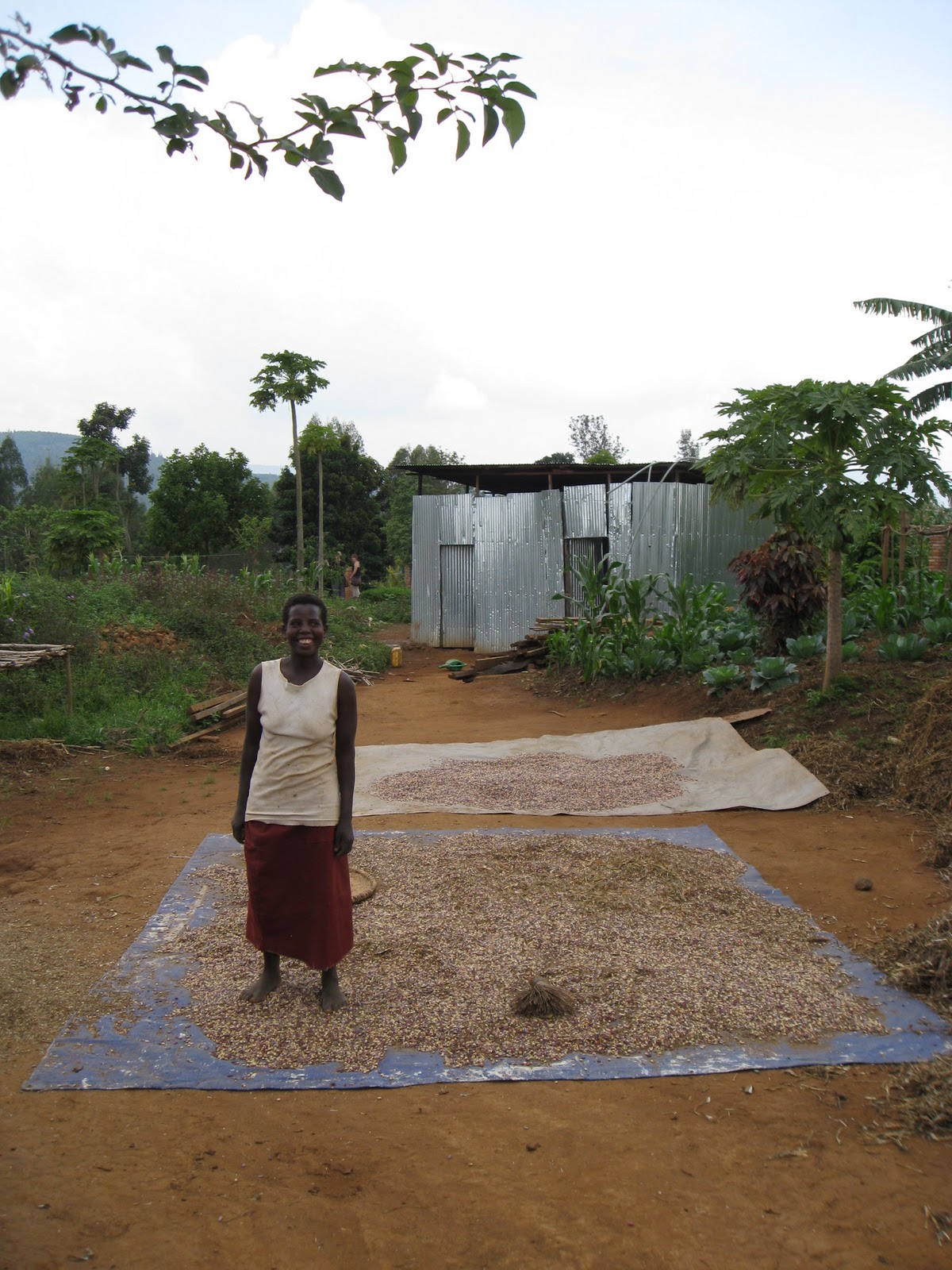
On our second day of orientation we were picked up early and headed a short way out of the city into rural Kigali to visit an orphange being built by FVA. Part of the programme fee that we paid goes directly to the construction of this orphange. There was a marked change to the landscape and the surroundings the further away from the city we got. Fields of produce, basic farms and small shacks lined the dusty red dirt roads. The poverty was more apparent and children wandered barefoot and in dirty clothes. As we pulled up to the site children wide eyed and smiling appeared from houses and looked on curiously at us, the muzungo. The orphanage is in the early stage of construction and is being built on a large piece of land. A few local families are using part of the land to grow vegetables and beans. Some of this produce feeds their familes and the rest goes to the other FVA programmes, partner orphanages and the volunteer house. We watched on fascinated as women sifted husks and dirt from beans which were laying on tarpulins drying in the sun. The sons of one of the ladies were adorable, the youngest in particular. He looked about 3 years old, barefoot with big brown eyes and eating raw corn on the cob. The children loved the attention, happily taking our hands and showing us around "their" dirt patch. They happily posed for photos and excitedly insisted we show them the image on the camera screen after each photo. It made me smile when I asked the ladies sifting beans if they were happy for me to take a photo of them and they too excitedly posed for the camera and giggled seeing the photos of themselves. We later found out that one of these ladies and her two sons, the ones we had been playing with, have nowhere to live so sleep in the field, taking shelter in the tin tool shed on rainy nights. The youngest child was was actually 5 years old and malnutrition had serverly stunted his growth.
We spent the afternoon at the FVA offices where we met Peace who will be our interpreter and some of the ladies we will be counselling and working with. As it was Tuesday the ladies were busy weaving baskets, this activity the income generating component of the Gender Based Violence Programme. The ladies were lovely and welcomed us with warm Kinyarwanda greetings.
Axx

Tuesday, January 18, 2011

Bring out the tissues...


On a more somber note, we had our orientation yesterday and visited the Genocide Memorial Museum in the city. We had a lovely morning tea with the coordinator Claire, where she explained some of the program details, rules, customs, and program fee breakdown. She assured us about the dress code; that as long as we don't wear mini-skirts or anything too provocative, people would be fine with our clothing and we shouldn't feel disrespectful. It was great to hear her point of view about volunteering and how far the programs have come since they started receiving volunteers in 2009. She also talked about her openess towards volunteers beginning new initiatives and suggesting improvements for their specific programs. Amy and I were definitely excited about this, since we had heard from past volunteers about the challenges of the program we are participating in (Gender Based Violence). She also described some of the challenges that we may face such as poor motivation, lack of communication, poverty, violence, abandoned children, HIV/AIDS, and many other issues. We had to hold back tears as she described why some of the kids are orphaned...some because their parents died of AIDS, some are genocide survivors, and others were simply abandoned; one boy in particular was found as a baby by authorities in a dog's mouth. She explained their struggle not having any family, not seeing any future for themselves, and the lack of preparational training for them when they leave the orphanage.
After learning more about Faith Victory Association, Rwanda, and the programs we'll be working in, we visited the Genocide Memorial Museum. At first it was like any other museum, describing the different turn of events leading up to the genocide, the political climate, pictures, and video interviews with survivors. As we continued through the exibitions, there was a chilling section containing thousands of individual pictures of people killed during the genocide, truly putting faces to the numbers. They also had skulls, bones, and clothing from people who were killed, some of them crushed and stained. It was interesting to see that without the tribal affiliations, which were imposed by the Belgium settlers, the people of Rwanda would have lived in perfect harmony. Instead, a system of hatred and hierarchy was imposed that eventually led to the genocide where colleagues, neighbors and family members murdered each other. The most emotional part for me was pictures of children that had been murdered and small descriptions of their favorite foods, personality, and how they were killed. These beautiful, innocent children who were leading happy, healthy lives, shot in the head, beat with a club, or slashed with a machete. It is truly unimaginable. Outside they have planted beautiful gardens to surround the mass graves, where about 300,000 of the over 1 million bodies are buried. Although we've had such an amazing time in this Kigali so far, today served as a reminder of why we are really here, what Rwandans went through during the genocide, and the issues they still struggle with.
xo Cait